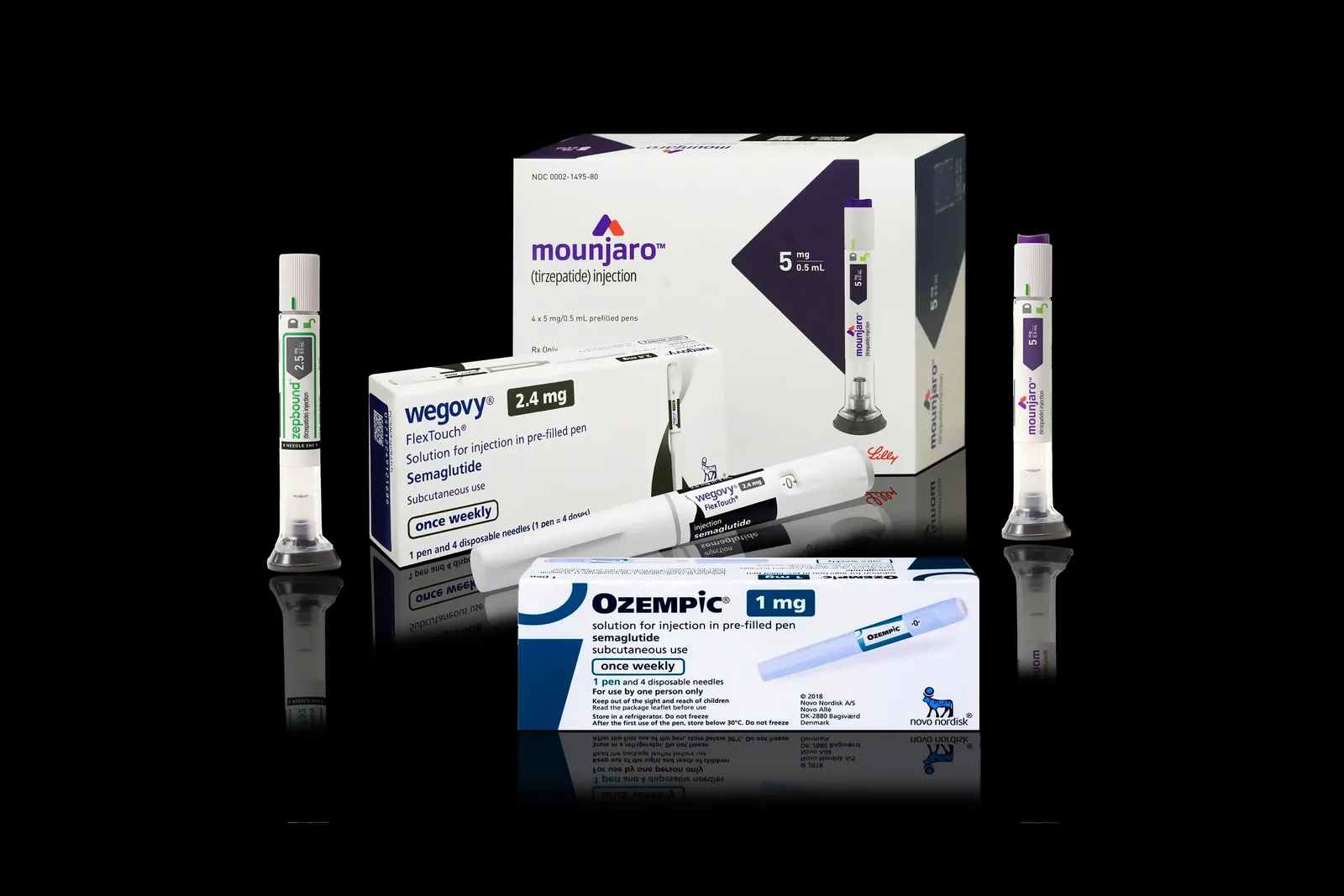
If you've been scrolling through social media or watching the news lately, chances are you've seen these three names pop up more than once. Ozempic, Wegovy, and Mounjaro have become household names in the world of weight loss, and the conversation around them shows no signs of slowing down. But with so much information floating around, it can be genuinely difficult to understand what sets these medications apart and whether any of them might be right for you.
This article breaks it all down in plain, simple terms so that anyone researching their weight loss options can walk away with a clearer picture.
First, a Quick Refresher on GLP-1
Before diving into the differences, it helps to understand what these medications have in common. Ozempic, Wegovy, and Mounjaro all belong to a class of drugs that work with the body's natural hunger and blood sugar hormones. They help the brain receive stronger "I'm full" signals, slow digestion, and reduce the blood sugar spikes that can drive cravings and overeating.
For a deeper dive into how GLP-1 hormones work in the body, the previous article in this series covers that topic in full detail. For now, the key takeaway is that all three of these medications work on similar biological pathways, even if they aren't identical in how they do it.
Ozempic: What It Is and Who It's For
Ozempic is the brand name for a drug called semaglutide, manufactured by Novo Nordisk. It was originally developed and FDA-approved specifically for the treatment of type 2 diabetes. Its primary purpose is to help lower blood sugar levels in adults whose diabetes is not adequately controlled through diet and exercise alone.
Ozempic is administered as a once-weekly injection and comes in doses of 0.5 mg, 1 mg, and 2 mg. While it does produce weight loss as a notable side effect, weight loss is not its FDA-approved indication. That distinction matters more than most people realize.
Why Do So Many People Use Ozempic for Weight Loss Then?
Physicians can legally prescribe any FDA-approved medication "off-label," meaning for a purpose beyond its original approval. Because semaglutide clearly causes significant weight loss, many doctors began prescribing Ozempic to patients without diabetes who wanted to lose weight. This off-label use is a big part of why Ozempic became so culturally visible and also why shortages became a serious problem for diabetic patients who depended on it.
To summarize who Ozempic is intended for:
- Adults with type 2 diabetes who need better blood sugar management
- Patients at high cardiovascular risk who may also benefit from its heart-protective effects
- It is sometimes prescribed off-label for weight loss, though Wegovy is the more appropriate choice for that specific goal
Wegovy: The Weight Loss Version of Semaglutide
Wegovy is also semaglutide, made by the same manufacturer as Ozempic. So what makes it different? The answer comes down to dosage and FDA approval.
Wegovy was specifically developed and approved by the FDA for chronic weight management in adults. It is prescribed at a higher maximum dose of 2.4 mg per week, compared to Ozempic's maximum of 2 mg. Clinical trials conducted for Wegovy's approval used this higher dose and demonstrated average weight loss of around 15 percent of total body weight over roughly 68 weeks.
Because Wegovy was designed and studied with weight loss as the primary goal, it is the more appropriate choice when a patient's primary concern is managing obesity rather than diabetes.
Who Is Wegovy Approved For?
The FDA has approved Wegovy for:
- Adults with a BMI of 30 or higher
- Adults with a BMI of 27 or higher who also have at least one weight-related health condition such as high blood pressure, high cholesterol, or type 2 diabetes
- It must be used alongside a reduced-calorie diet and increased physical activity for best results
Mounjaro and Zepbound: A Step Further
Mounjaro is the brand name for tirzepatide, a medication developed by Eli Lilly that represents a meaningful evolution in this class of drugs. While Ozempic and Wegovy target only the GLP-1 receptor, Mounjaro targets two receptors simultaneously: GLP-1 and GIP, which stands for glucose-dependent insulinotropic polypeptide.
GIP is another gut hormone involved in insulin secretion and fat metabolism. By activating both GLP-1 and GIP pathways at the same time, Mounjaro produces a stronger combined effect on blood sugar control, appetite suppression, and ultimately weight loss.
Like Ozempic, Mounjaro was originally FDA-approved for type 2 diabetes management. However, Eli Lilly later received FDA approval for tirzepatide under the brand name Zepbound, which is specifically indicated for chronic weight management.
What Kind of Results Does Mounjaro Produce?
The clinical data on tirzepatide has been striking. In trials studying its use for weight management, participants lost an average of 20 to 22 percent of their body weight over about 72 weeks. Some participants lost even more. These are results that begin to approach what many patients achieve with bariatric surgery, which has made tirzepatide a particularly exciting development in obesity medicine.
To put that in perspective:
- A person weighing 250 pounds could potentially lose 50 to 55 pounds or more
- Results were significantly higher than those seen with semaglutide alone in head-to-head comparisons
- Improvements in blood pressure, cholesterol, and blood sugar were also more pronounced
Side Effects Across All Three Medications
All three medications share a similar side effect profile because they work through overlapping hormonal pathways. The most commonly reported side effects include:
- Nausea, particularly in the early weeks as the dose is gradually increased
- Vomiting or diarrhea in some patients
- Constipation
- Stomach discomfort or bloating
- Decreased appetite, which is part of the intended effect but can sometimes feel unpleasant
These side effects tend to be most noticeable when starting the medication or moving to a higher dose. For most people, they improve significantly over time. Staying well-hydrated, eating smaller meals, and avoiding high-fat or heavily processed foods can help manage early discomfort.
There are also certain patients who should not take these medications, including those with a personal or family history of medullary thyroid cancer or a condition called multiple endocrine neoplasia syndrome type 2. A thorough evaluation with a qualified physician is always the right first step before starting any of these treatments.
So Which One Is Better?
This is the question almost everyone asks, and the answer is genuinely that it depends. No single medication is universally superior because no two patients are exactly alike. The right choice depends on several factors:
- Whether the primary goal is blood sugar control, weight loss, or both
- How much weight loss is needed to meaningfully improve health
- Insurance coverage and medication availability
- How a particular patient's body responds to treatment
- Whether the patient has other conditions that might influence which drug is most appropriate
What the data does suggest is that tirzepatide currently produces the most significant weight loss results among this class of medications. However, some patients respond exceptionally well to semaglutide, and for others, access and affordability make the decision for them.
Where Does Surgery Fit Into This Conversation?
GLP-1 and dual-agonist medications like Mounjaro have genuinely changed the landscape of obesity treatment. For patients with moderate obesity or those who are not candidates for surgery, these medications offer a meaningful, medically supervised path forward.
That said, bariatric surgery still produces the highest and most durable long-term weight loss results available. Procedures like sleeve gastrectomy and gastric bypass also naturally increase the body's own GLP-1 production, which is part of why they are so effective at resolving conditions like type 2 diabetes, often within days of the procedure.
Some patients may find that medication works well for a period but does not get them all the way to their health goals. Others may use medication as a bridge while preparing for surgery. The most important thing is that no one has to figure this out alone.
Every Journey Deserves a Personalized Plan
The explosion of interest in Ozempic, Wegovy, and Mounjaro reflects something important: people are paying attention to obesity as the serious medical condition it truly is. These medications are not shortcuts or quick fixes. They are legitimate medical tools that, when used appropriately and under proper supervision, can change lives.
Whether medication, surgery, or a combination of both turns out to be the right answer, the path forward always starts with an honest, informed conversation with a physician who understands the full picture.